


For individuals who rely on a wheelchair, independence is everything. One of the most critical daily tasks is transferring safely between a wheelchair and a bed. The right wheelchair transfer bed doesn’t just provide comfort — it becomes a powerful tool that enables independent patient transfer, reduces caregiver strain, and lowers fall risk.
Whether in a home setting, rehab facility, or long-term care environment, bed design plays a pivotal role in transfer success.
Why Independent Transfers Matter
According to the Centers for Disease Control and Prevention, falls are a leading cause of injury among adults, especially those with mobility limitations. Many falls occur during transitions — getting in and out of bed being one of the highest-risk moments.
When patients can perform safe, controlled transfers independently:
- Confidence improves
- Fall risk decreases
- Caregiver burden is reduced
- Recovery and mobility outcomes improve
The right bed supports strength, technique, and proper positioning.
Key Features of a Wheelchair Transfer Bed
Not all beds are designed to support independent patient transfer. Here’s what makes the difference:
- Adjustable Height Range
- A bed that lowers to wheelchair seat height allows for a level or slightly downhill transfer. This minimizes lifting effort and maximizes control.
- Ideal feature: Height adjustment that aligns with most wheelchair seat heights (typically 17–23 inches).
- Firm Edge Support
- Reinforced perimeter support prevents “sink-in” during seated positioning on the edge of the bed — critical for safe pivot transfers.
- Electric Positioning
- Head and knee articulation assists with positioning before and after transfer. Elevating the head section can make it easier to push up into a seated posture.
- Grab Bars or Assist Rails
- Strategically placed assist rails provide leverage points for independent movement while maintaining safety.

Common Independent Patient Transfer Techniques
The appropriate technique depends on upper body strength, balance, and mobility level.
1. Stand-Pivot Transfer
Best for patients who can bear some weight.
Steps:
- Position wheelchair at a slight angle next to the bed.
- Lock wheelchair brakes and remove footrests.
- Adjust bed to equal or slightly lower height than wheelchair.
- Push to standing using armrests and bed edge.
- Pivot and sit slowly onto bed.
2. Lateral (Slide) Transfer
Ideal for patients with limited standing ability.
Steps:
- Align wheelchair parallel to the bed.
- Lock brakes and remove armrest if possible.
- Use a transfer board if needed.
- Shift weight using arms to move across in small increments.
A properly aligned wheelchair transfer bed significantly reduces friction and uneven height challenges.
How the Right Bed Reduces Caregiver Strain
For caregivers, improper bed height is one of the leading causes of musculoskeletal injury. Adjustable beds like the Transfer Master Supernal 3 can:
- Eliminate excessive bending
- Support ergonomic transfer positioning
- Allow one-person assistance instead of two
Investing in the right wheelchair transfer bed protects both the patient and the caregiver.
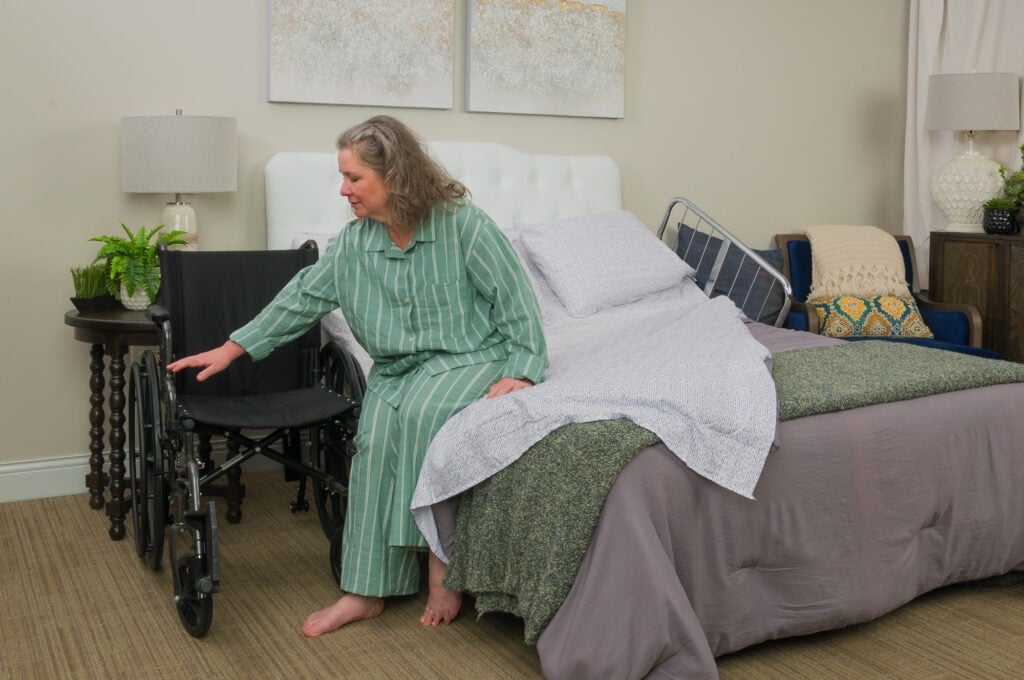
Real-World Impact: Independence at Home
In homecare environments, the correct bed can mean the difference between:
❌ Needing full-time assistance
✅ Managing daily transfers independently
For aging adults, maintaining the ability to transfer independently often determines whether they can safely remain at home.
Frequently Asked Questions:
A bed is more than a place to sleep — it’s a mobility tool. When designed correctly, a wheelchair transfer bed empowers users to perform safe, controlled independent patient transfers every day.
The right features promote dignity, safety, and long-term independence.
If you’re evaluating beds for homecare, rehab, or long-term care environments, prioritize transfer-friendly design. Independence starts with the right foundation.
Let our experts at Transfer Master help you in selecting the right bed for you. Send us a message or call us at 678-291-3190