


Everything you need to create a safe, functional, and dignified care space — from equipment selection to room layout planning.
Whether you’re bringing a loved one home after surgery, managing a long-term condition, or planning ahead for aging in place, knowing how to set up a home hospital room correctly can make an enormous difference — for the patient’s comfort, the caregiver’s safety, and everyone’s peace of mind. This guide walks you through every step: choosing the right equipment, planning your room layout, meeting space requirements, and making the space work for both patient and caregiver.
In this guide
- Why a dedicated home care room matters
- Essential equipment checklist
- Room layout: the key principles
- Recommended room layout diagram
- Space requirements
- Caregiver accessibility tips
- Safety and infection control
- Get a free home setup consultation
Why a Dedicated Home Care Room Matters
Caring for someone at home is one of the most meaningful things a family can do — but it is also one of the most physically and logistically demanding. Without the right setup, everyday care tasks like repositioning, wound care, or administering medication become unnecessarily difficult and increase the risk of injury for both the patient and caregiver.
A properly designed home hospital room changes this entirely. By centralizing the right equipment in an accessible, safe space, you reduce caregiver strain, minimize fall risks, and create a calm environment that supports recovery and long-term well-being.
The good news: you don’t need to gut your home or spend a fortune. Most setups work beautifully in a standard spare bedroom. What matters most is deliberate planning.
Pro tip Before purchasing any equipment, consult your loved one’s physician or a discharge planner. They can provide a list of medically necessary items — some of which may be covered by Medicare, Medicaid, or private insurance.
Essential Equipment Checklist
Use this checklist when planning how to create a medical room at home. Items are grouped by priority — essential items are typically required from day one; recommended items significantly improve care quality; optional items may be useful depending on the patient’s specific needs.
| Equipment | Priority | Notes |
| Adjustable hospital-style bed | Essential | Choose a full-electric hi-low model for safest caregiver transfers. Look for head, foot, and height adjustment. |
| Pressure-relief mattress | Essential | For anyone spending extended time in bed. Reduces risk of pressure ulcers (bedsores) significantly. |
| Bed rails / half rails | Essential | Prevent falls and give the patient a grip point for repositioning. Should be removable. |
| Overbed table | Essential | Keeps meals, medication, devices, and personal items within reach without the patient needing to lean. |
| Bedside commode | Essential | Critical if the patient cannot easily reach the bathroom. Look for models with armrests and adjustable height. |
| Shower/transfer chair | Essential | For safe bathing. Pair with a handheld showerhead for best results. |
| Patient call system / baby monitor | Essential | Allows the patient to alert caregivers from another room. A simple two-way monitor works for most home setups. |
| Wheelchair or transport chair | Recommended | Essential for non-ambulatory patients. Measure doorways before purchasing. |
| Gait belt | Recommended | Worn around the patient’s waist during assisted transfers. One of the most injury-preventing tools a caregiver can have. |
| IV pole / medication storage | Recommended | If the patient receives IV medications at home. Lockable storage is important for controlled substances. |
| Pulse oximeter & blood pressure monitor | Recommended | Home monitoring equipment that can help catch changes early. Consult your physician about which vitals to track. |
| Rollator walker | Recommended | For patients who are partially ambulatory. The built-in seat allows safe resting mid-walk. |
| Medical-grade bed wedge | Optional | Useful for acid reflux, respiratory conditions, or post-surgical positioning. |
| HEPA air purifier | Optional | Particularly recommended for patients with respiratory conditions or compromised immune systems. |
| Hospital curtain / privacy screen | Optional | Useful if the room is shared, or to create a visual separation for personal care procedures. |
Quick-reference essential equipment checklist
- Adjustable hi-low bed
- Pressure-relief mattress
- Bed rails (half or full)
- Overbed table
- Bedside commode
- Transfer / shower chair
- Call system or monitor
- Non-slip floor mats
- Gait belt
- Wheelchair (if needed)
- Vitals monitoring equipment
- Medication storage
Room Layout: The Key Principles
Getting the layout right is just as important as having the right equipment. A poorly arranged room — even with excellent equipment — can create hazards and slow down care routines. Here are the principles that guide a good home hospital room setup.
1. Center the bed in the room
Positioning the hospital bed so that caregivers can access both sides is non-negotiable. Tasks like turning a patient, changing bed linens, and assisting with transfers require unobstructed access on at least one long side — ideally both. Never push the bed flush against a wall.
2. Plan for the “care triangle”
Think of the three most frequent destinations in the room: the bed, the commode or bathroom, and the caregiver supply station. These three points should form a compact, unobstructed triangle. The shorter the path between them, the safer and less fatiguing care becomes.
3. Keep the dominant pathway clear
The main path from the door to the bed should be at least 36 inches (91 cm) wide at all times — wide enough for a wheelchair. Remove rugs, low furniture, and anything that could catch a rollator or become a trip hazard.
4. Position supplies within arm’s reach
Gloves, wipes, dressings, medication, and other supplies should be organized within arm’s reach of the caregiver’s working position beside the bed. A rolling cart or bedside organizer prevents unnecessary trips across the room mid-task.
5. Control lighting
Bright, even lighting is important for safe care — but patients recovering from illness often need the ability to dim lights for rest. Install a dimmer switch or use layered lighting: bright overhead for care, bedside lamp or nightlight for comfort. Nightlights along the floor path to the commode significantly reduce fall risk at night.
Recommended Home Hospital Room Layout
The diagram below illustrates an optimal layout for a standard 12 × 12 ft (3.6 × 3.6 m) room. This layout places the bed at the center of the room with clear caregiver access on both sides, supply storage on the caregiver’s dominant side, and the commode close to the bed — minimizing patient transfer distance.
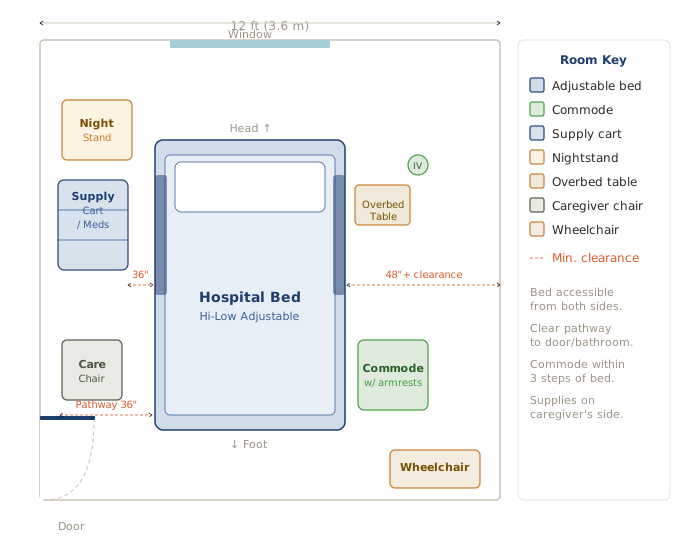
Recommended home hospital room layout for a 12 × 12 ft room. Dashed red lines indicate minimum clearance requirements. Always verify clearances with your specific equipment dimensions.
Space Requirements: What You Need to Know
One of the most common mistakes families make when planning a home hospital room setup is underestimating the space requirements — not just for the bed itself, but for safe movement around it. Here’s what to plan for.
Minimum room size
A 10 × 10 ft room (100 sq ft) is the bare minimum. A 12 × 12 ft or larger room gives much more comfortable working space for caregivers and equipment.
Bed side clearance
At least 36 inches (91 cm) on both long sides of the bed. This allows a caregiver to assist from both sides and accommodates a wheelchair or rollator.
Bed foot clearance
A minimum of 48 inches (122 cm) at the foot of the bed for safe transfers into a wheelchair and for caregivers assisting with lower-body care.
Doorway width
Standard doorways (28–30 in) are often too narrow for wheelchairs. Aim for a 32-inch clear opening; 36 inches is ADA-compliant and far more accessible.
Floor surface
Hard, smooth flooring (hardwood, vinyl, tile) is easiest for wheelchair movement and easiest to clean. If carpet is present, consider a low-pile option or removable hard surface panels.
Bathroom proximity
The closer to a bathroom, the better. If the bathroom is not adjacent, a bedside commode becomes even more critical and should be placed within 3–4 steps of the bed.
Important If your home requires structural modifications — such as widening a doorway, installing a roll-in shower, or adding grab bars — these should be completed before the patient arrives home. Contact a Certified Aging-in-Place Specialist (CAPS) or occupational therapist to assess your specific situation.
Caregiver Accessibility: Setting Up for the Person Providing Care
Creating a great home hospital room isn’t just about the patient — it’s equally about protecting the caregiver. Caregiver injury (most often back injuries from unsafe patient transfers) is one of the leading causes of caregiver burnout and hospitalization. A thoughtfully designed room prevents this.
- Use an adjustable-height bed A full-electric hi-low bed allows the caregiver to raise the bed to a comfortable working height for tasks like wound care or bathing, and lower it for the patient to exit safely. This single feature prevents more caregiver back injuries than any other equipment choice.
- Never require a caregiver to reach across the bed If a task requires reaching over the patient — for repositioning, tucking in bedding, or adjusting equipment — the caregiver should move to the other side of the bed instead. This requires bilateral access, so keep both sides clear.
- Place supplies at elbow height A rolling supply cart positioned at elbow height (roughly 36–40 inches from the floor for most adults) keeps frequently used items accessible without bending. Avoid storing heavy items above shoulder height.
- Use a gait belt for every transfer The gait belt is the single most important transfer safety tool a caregiver can have. It gives a stable, safe grip during assisted standing, pivoting, and sitting transfers — and dramatically reduces the chance of both the patient falling and the caregiver straining their back.
- Set up a caregiver workstation A designated chair or stool at bedside — not just for patient visits, but for chart-keeping, administering medication, and hands-on care — keeps the caregiver comfortable during extended care sessions. A small counter or table for documentation is a valuable addition.
- Learn proper body mechanics Equipment alone isn’t enough. Every caregiver should learn basic safe lifting and transfer techniques — bending at the knees, keeping the patient close, and using equipment like slide boards and transfer belts. Many hospitals offer caregiver training before discharge; take advantage of it.
Caregiver tip Schedule regular respite — a few hours each week where someone else provides care, or where the patient is safe and independently settled. Caregiver fatigue is the #1 threat to sustainable home care. A well-designed room helps, but rest is irreplaceable.
Safety and Infection Control Basics
Home care environments can’t replicate hospital-grade infection control, but basic measures reduce risk substantially — especially for patients who are immunocompromised or recovering from surgery.
Hand hygiene station
Place a hand sanitizer dispenser and a box of nitrile gloves at the entrance to the room and at the bedside. Make hand washing (or sanitizing) before and after any contact with the patient a non-negotiable routine for everyone entering.
Waste disposal
Use a lined, lidded bin for any soiled dressings, gloves, or single-use items. If the patient generates sharps waste (insulin needles, etc.), a proper sharps container is legally required in most states — and your pharmacy can usually provide these for free.
Fall prevention
Remove all loose rugs. Secure any electrical cords along the baseboard. Ensure the path from the bed to the commode is lit at night with nightlights. Confirm bed rails are properly attached before every sleep period.
Skin care and repositioning
For patients who are bed-bound, a turning schedule is essential. Most guidelines recommend repositioning every two hours during the day. A pressure-relief mattress does not eliminate this need — it reduces it. Document each turn to ensure consistency across caregivers.
Not sure where to start? We can help.
Our home setup specialists have helped thousands of families create safe, comfortable care environments. Get a free 30-minute consultation — no obligation.