
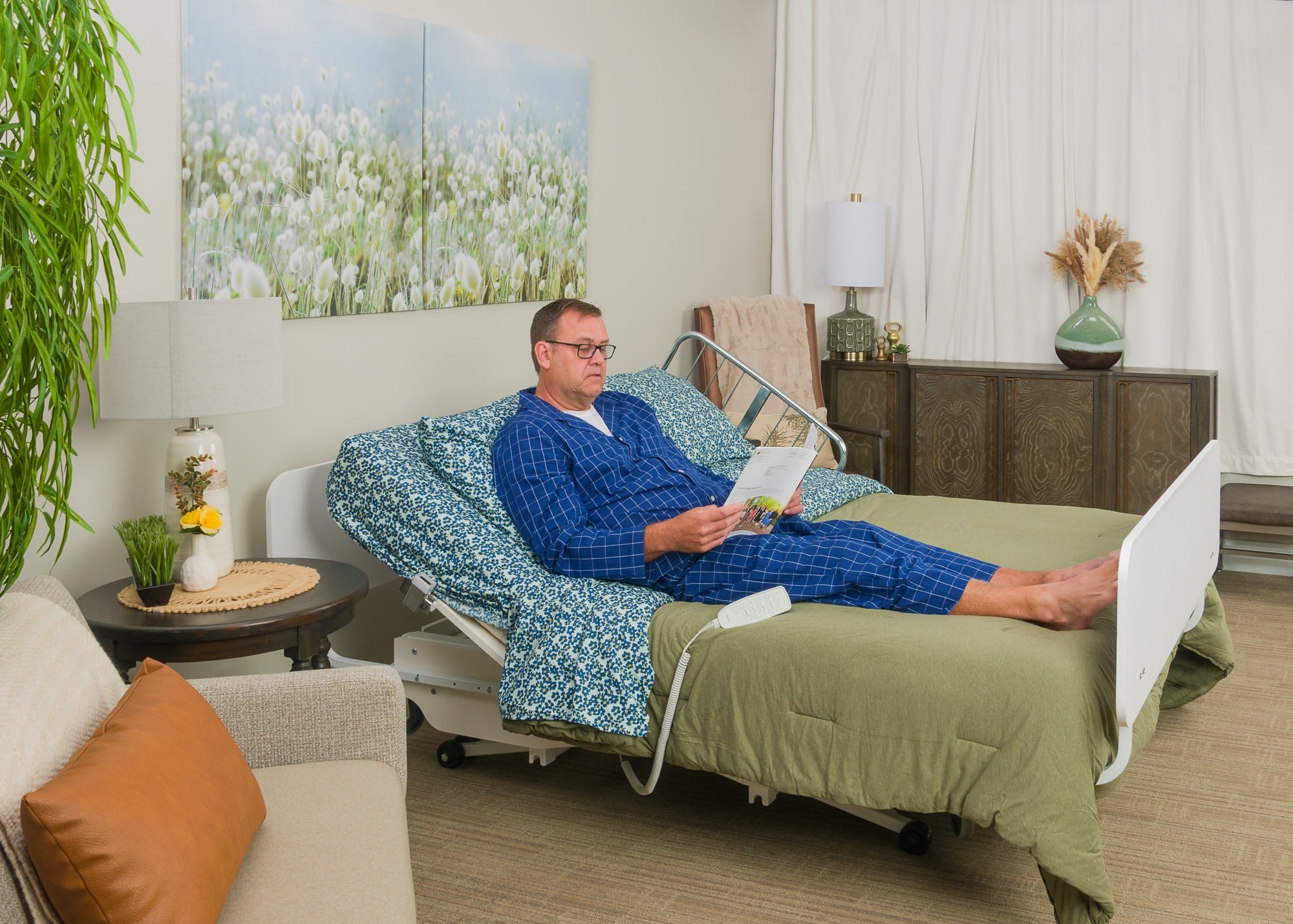

Nighttime acid reflux can turn bedtime into a nightly cycle of burning discomfort, coughing, and interrupted sleep. For decades, gastroenterologists have recommended a simple physical fix: sleeping with your upper body raised.
However, how you achieve that elevation matters just as much as doing it. Stacking extra pillows under your head usually only leads to a stiff neck without stopping the burn.
1. Quick Answer: How High to Raise the Bed
Major medical organizations recommend elevating the upper body during sleep to ease nighttime reflux. The Mayo Clinic advises raising the head of the bed 6 to 9 inches (about 15 to 23 cm), and the National Institute of Diabetes and Digestive and Kidney Diseases (NIDDK) suggests raising the head 6 to 8 inches (about 15 to 20 cm). Cleveland Clinic gastroenterologists note that pillows alone aren’t enough, because the whole torso, not just the head, needs to be raised.
Clinical trials show that this specific range provides enough of a slope to use gravity against reflux without causing the sleeper to slide uncomfortably down the mattress.
2. Why Raising Your Head Helps at Night
When you lie completely flat, your stomach contents sit level with your esophagus. If your lower esophageal sphincter (LES)—the valve acting as a gateway between the two—relaxes during the night, stomach acid easily flows upward, triggering heartburn or silent reflux.
Raising your head and upper torso creates a downward slope. Gravity becomes your primary ally, keeping stomach acid safely where it belongs. Crucially, the elevation must create an incline for your entire torso starting from the hips, rather than just bending your neck.
3. Three Ways to Elevate Your Bed Compared
| Method | Estimated Cost | Comfort Level | Partner Impact | Adjustability |
| Bed Risers (Under head-end legs) | Low ($15 – $40) | Moderate (slopes the whole bed) | High (slopes your partner’s side too) | None (fixed angle) |
| Wedge Pillow (Placed under mattress or torso) | Low-Medium ($40 – $100) | Varies (can feel stiff or cause sliding) | None (only affects your half) | None (fixed angle) |
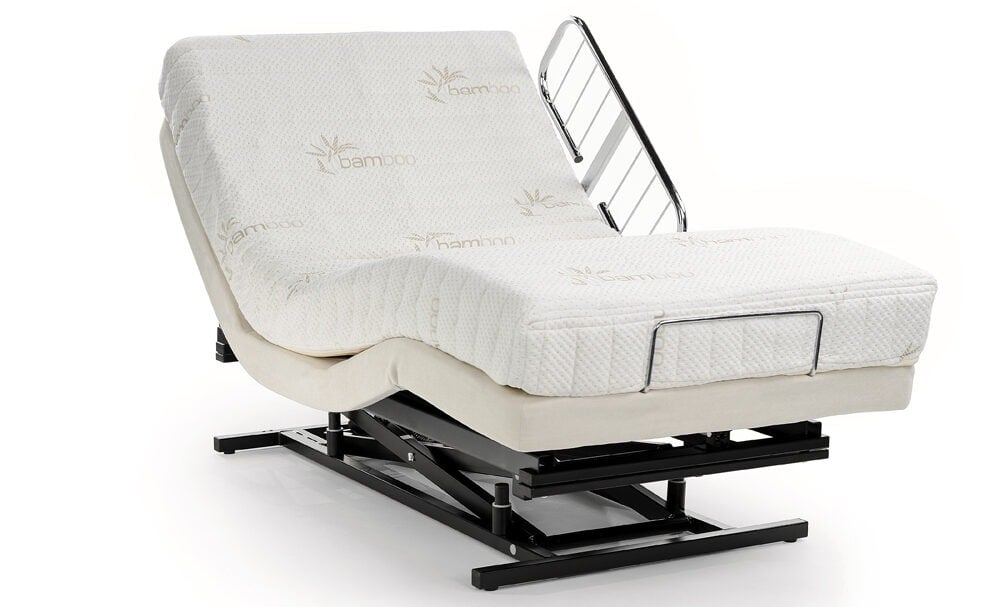
| Adjustable / Hospital Base (Powered head section) | High ($600 – $3,000+) | High (supports natural body curves) | Varies (requires split setup for couples) | High (fully customizable angles) |
4. Common Problems with Non Adjustable Bases
While elevation helps your reflux, each solution comes with its own drawbacks:
- Bed Risers: Raising the actual bed frame tilts the entire bed. This means your partner’s side is also sloped, which can cause them to slide downward or wake up with lower back strain. It also makes getting in and out of bed awkward at an angle.
- Wedge Pillows: Foam wedges sit on top of your mattress. While they lift the torso, many sleepers complain of sliding down the wedge during the night, waking up with lower back tension, or feeling restricted to sleeping strictly on their back.
5. Couples with One Reflux Sufferer: Split and Dual Beds
If only one partner deals with acid reflux, forcing both people to sleep on a tilted bed or a rigid wedge is a recipe for sleep deprivation.
The modern solution is a split configuration:
- Split King Adjustable Bases: This setup uses two separate twin-XL mattresses and independent motorized bases pushed together under one king-size frame. One partner can elevate their head to a perfect 15-degree anti-reflux angle, while the other partner stays completely flat.
6. When to See a Doctor

While elevating the head of your bed is an effective lifestyle modification for occasional or mild GERD (Gastroesophageal Reflux Disease), it is not a cure-all. You should schedule an evaluation with a physician if:
- You experience heartburn more than twice a week despite lifestyle changes.
- Over-the-counter antacids or acid reducers (like PPIs or H2 blockers) fail to control your symptoms.
- You experience difficulty swallowing (dysphagia), unexplained weight loss, persistent chest pain, or vomiting.
Chronic, unmanaged acid reflux can lead to long-term esophageal damage, making professional medical guidance essential.
Conclusion: Finding the Right Balance for Restful Sleep
Living with acid reflux doesn’t mean resigning yourself to sleepless, burning nights. Elevating your upper body by 6 to 8 inches remains one of the most effective, doctor-recommended lifestyle changes you can make to let gravity do the work and protect your esophagus.
However, as we’ve explored, the path to a better night’s sleep isn’t always straightforward—especially when navigating insurance gaps, out-of-pocket costs, and shared bedroom compromises. Whether you start with budget-friendly bed risers, experiment with a supportive wedge pillow, or invest in a long-term motorized split-adjustable base, the key is finding a sustainable setup that keeps you comfortable without disrupting your partner.
By planning ahead, understanding your options, and pairing home remedies with professional medical guidance, you can finally reclaim your nights and wake up feeling rested.
Are you currently using any of these elevation methods for your reflux, or are you looking to upgrade your sleep setup soon? Let us at Transfer Master help you!
Sources:
Will a Wedge Pillow Help My Acid Reflux? – Cleveland Clinic
Treatment for GER & GERD – NIDDK
How do I alleviate heartburn discomfort? – Mayo Clinic News Network