
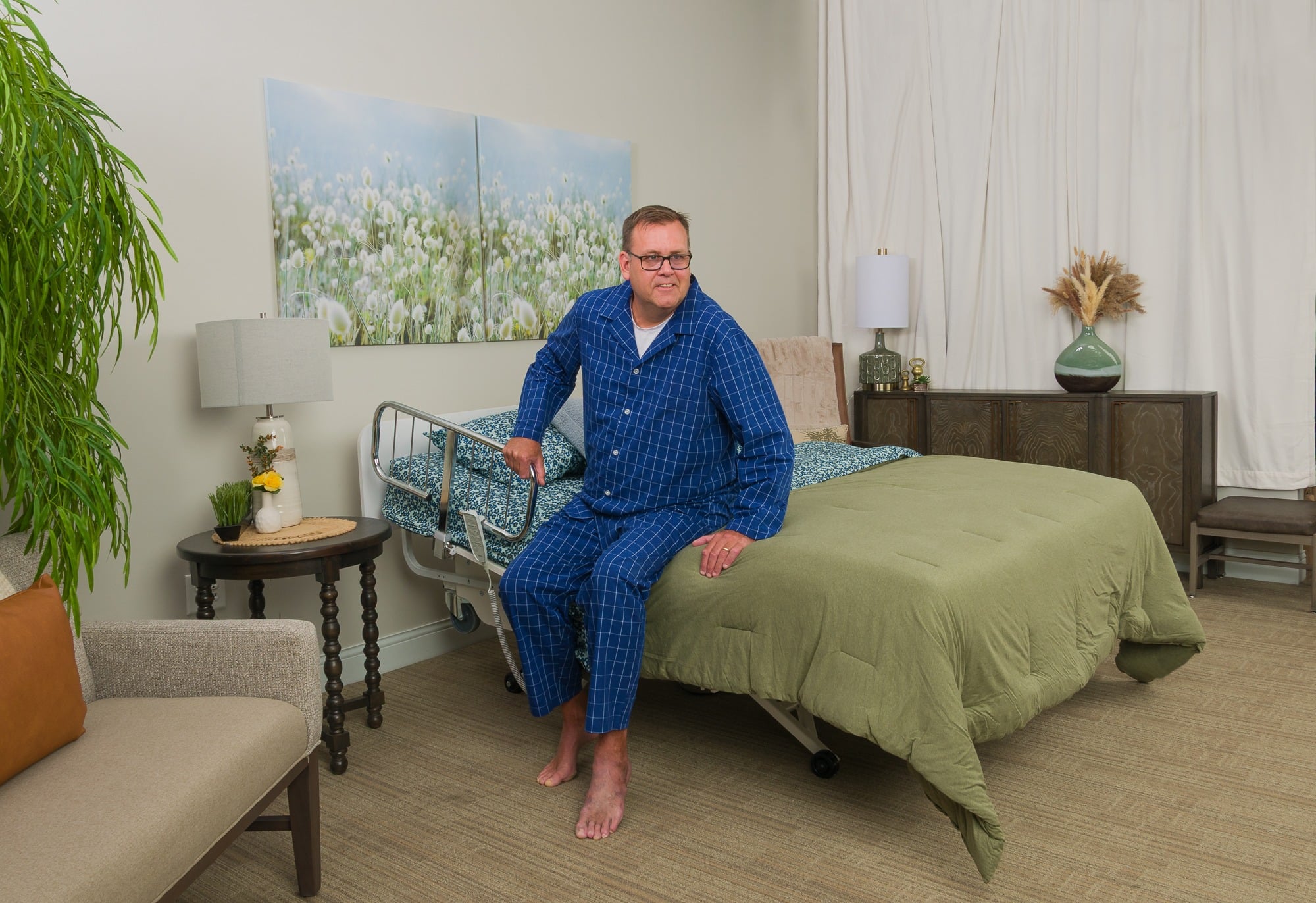

Elderly falls are more than inconvenient — they are dangerous. According to the Centers for Disease Control and Prevention (CDC), one in four adults age 65+ falls each year, resulting in over 3 million emergency department visits annually. With injuries ranging from fractures to head trauma, fall prevention is a top priority for caregivers and healthcare providers alike. That’s where a fall prevention hospital bed or low hospital bed for older people can make an impactful difference in at-home safety.
In this article, we explore 5 key ways home hospital beds prevent falls in older people, supported by clinical research, height specifications, and real case studies.
1. Adjustable Height Reduces Risk During Transfers
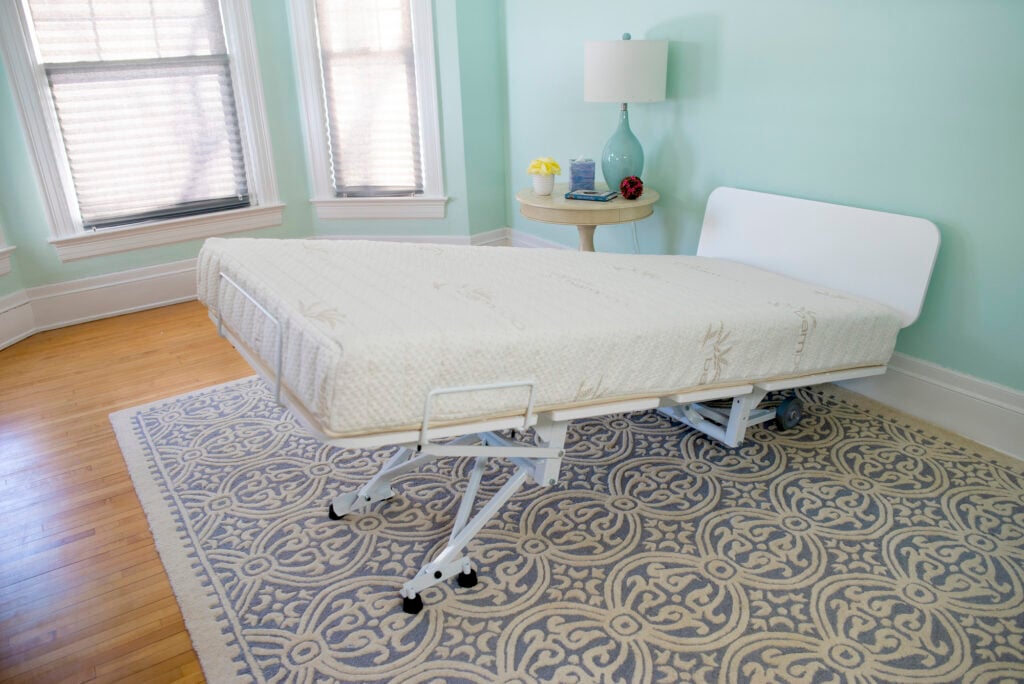
One of the core features of a true fall prevention hospital bed is adjustable height:
- Clinical beds can lower to 8–10 inches off the floor, significantly reducing fall impact if someone attempts to get up unsupervised.
- Standard beds sit much higher — often 20–25 inches — increasing shear stress and the likelihood of a fall.
Clinical research shows that low bed settings reduce fall severity and frequency in high-risk populations. A study published in the Journal of Gerontological Nursing found that low bed placement correlated with a 35% reduction in nighttime falls among elderly patients with mobility issues.
2. Side Rails Improve Stability and Confidence
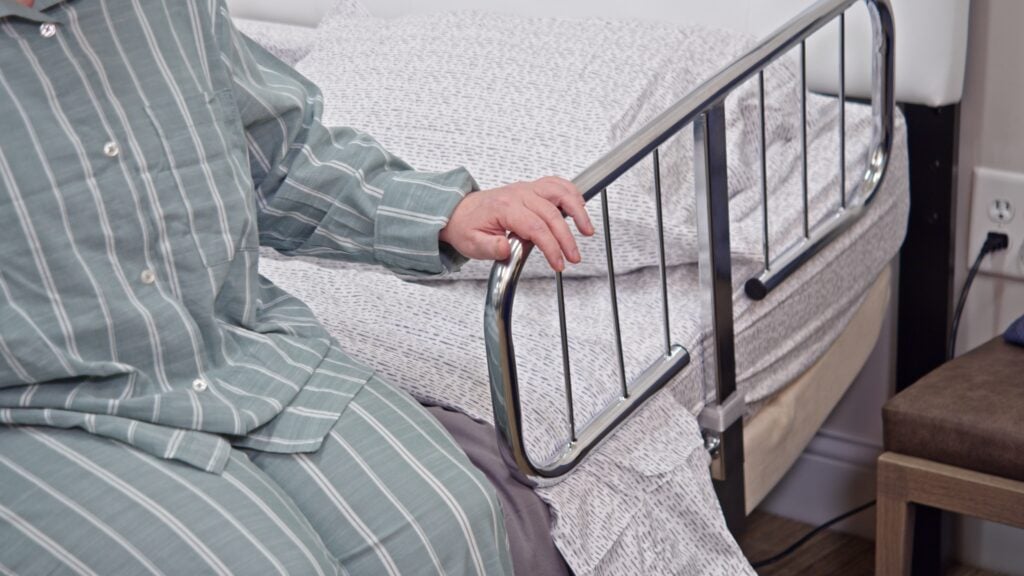
Hospital beds come with optional side rails that serve dual purposes: fall prevention and patient confidence.
- Partial side rails offer support during repositioning without fully restricting mobility.
- Studies find that appropriate rail use can decrease fall incidents by up to 40% in patients with balance deficits.
Side rails also provide a physical anchor for patients to pull themselves up into a safer position.
Case Study:
Mr. S., a 78-year-old recovering from a hip replacement, used side rails to steady himself when shifting positions at night. Rather than attempting risky stand-ups, he learned to use rails, reducing nighttime call-ins for help by 60%.
3. Bed Designs that Give You Access to Standard Room Items
Home hospital or adjustable beds such as the Transfer Master Supernal 3 are designed to fit perfectly in your home. With features such as the European style Head Tilt, the head section adjusts hugging your wall giving you easy access to your nightstand and take up no additional floor space in your room keeping navigating around your bed easy.
4. Controlled Lowering and Trendelenburg Options Support Safe Positioning
Adjustability isn’t just vertical — modern home hospital beds offer tilt and Trendelenburg positions, which support:
- Safe repositioning
- Pressure redistribution to prevent skin breakdown
- Easier transfers with caregiver assistance
Proper positioning helps older adults maintain balance and reduces the urge to pivot or roll unsafely.
Height Specifications:
- Trendelenburg tilt (typically ±12–18°)
- Height range often 8–30 inches
These capabilities optimize both comfort and safety.
A review in Geriatric Nursing noted that adjustable positioning contributes indirectly to fall reduction by improving overall patient stability and reducing involuntary movements.
5. Enhanced Caregiver Ergonomics Support Safer Assistance
Home hospital beds aren’t just for patients — they protect caregivers too.
- Adjustable heights allow caregivers to work at waist level, reducing strain and enabling safer transfers.
- Safer transfer mechanics reduce the risk of mishaps that contribute to patient falls.
A survey of home health aides reported that beds with adjustable height and tilt reduced awkward lifting and improved transfer confidence, decreasing accidental slips during patient movement.

Conclusion
For families and caregivers committed to fall prevention, especially for those searching for a low hospital bed for elderly or a fall prevention hospital bed, these features matter. From height adjustability and side rails to alarms and tilt functions, home hospital beds represent an evidence-based, practical intervention to protect vulnerable adults.
By understanding these features — and pairing them with caregiver training and clinical guidance — you can create a safer environment that dramatically reduces the risk of falls and their serious consequences.
For help in finding your adjustable home hospital bed, let our experts at Transfer Master help you.
Send us a message or call us at 678-291-3190